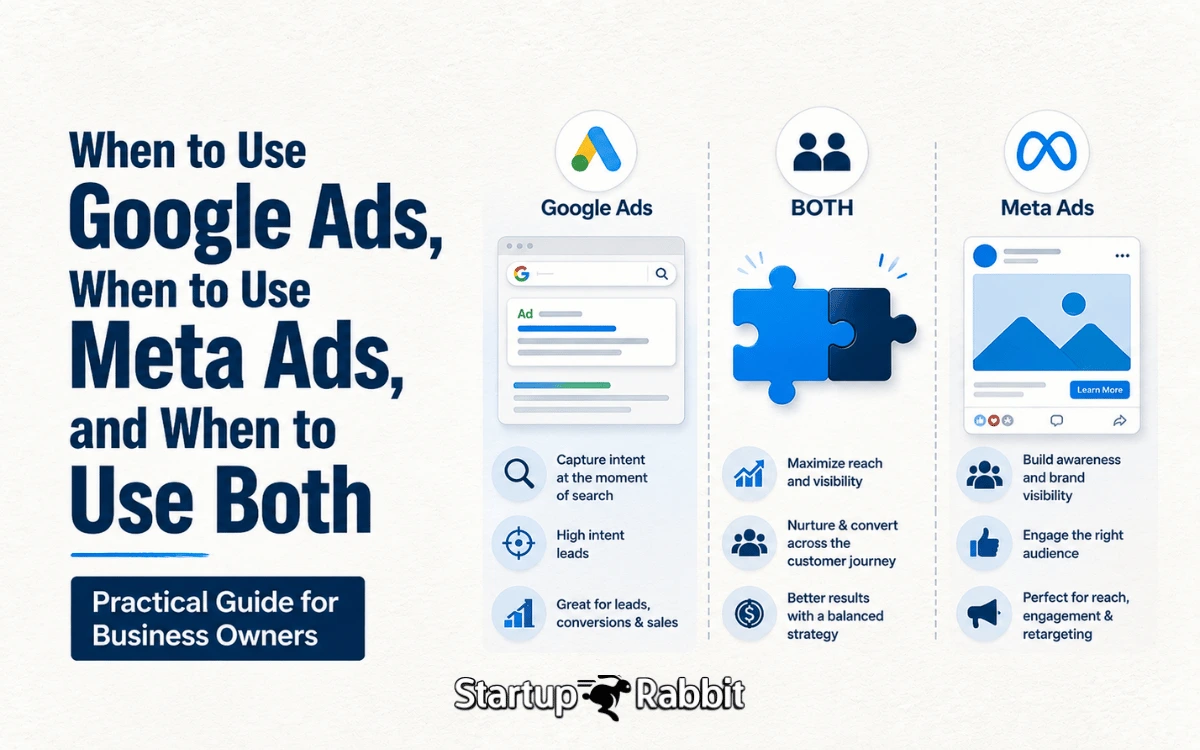
Almost every business owner eventually asks the same question: should our ad budget go to Google or to Meta (Facebook and Instagram)? The honest answer is that it depends entirely on what your customer is doing at the moment you’re trying to reach them – and understanding that difference is the key to spending your budget well.
Google Ads vs Meta Ads – What’s the Difference?
Google Ads targets your business advertisement to potential customers who are already searching for specific products or services that you offer. Meta Ads shows your business to people scrolling through their feed, based on interests, behaviors, and demographics – regardless of whether they were actively looking for you.
Neither is inherently better. They serve fundamentally different moments in a customer’s journey.
Google Search Ads vs Social Ads – Understanding User Intent
How Google Ads Capture Existing Demand
Someone searching “emergency plumber near me” or “best CA for GST filing Navi Mumbai” already knows what they want. With Google Ads, you are guaranteed that potential customers looking for products or services similar to you will see your business.
How Meta Ads Create New Demand
Someone scrolling Instagram isn’t looking for a plumber – but a well-targeted ad for a new product or service can introduce a need they didn’t know they had, or hadn’t yet acted on.
Choosing Based on the Customer Buying Journey
If your customers typically search before buying (services, emergencies, B2B solutions), prioritize Google Ads. If your product benefits from visual discovery and impulse or consideration-driven buying (fashion, lifestyle, D2C products), Meta Ads often performs better.
Google Ads vs Meta Ads Comparison at a Glance
| Factor | Google Ads | Meta Ads |
|---|---|---|
| Intent | High – active search | Lower – discovery-based |
| Best for | Services, high-intent purchases | Visual products, brand awareness |
| Targeting | Keyword-based | Interest and behavior-based |
| Cost driver | Keyword competition | Audience size and engagement |
| Typical funnel stage | Bottom/middle | Top/middle |
When Google Ads Is the Better Choice
Businesses Selling High-Intent Services
These are services like legal, medical, home repair, etc., where people start actively searching the moment they need them.
Local Service Providers
Businesses with a “near me” feature or ones based on proximity benefit a lot from Google’s strong local intent matching.
Emergency or Immediate Purchase Searches
In such cases, where a customer needs something on the spot, Google Ads is the one place that will capture the moment best.
B2B Lead Generation Campaigns
Top-level decision-makers who are looking for a particular solution usually start by conducting search-based inquiries.
When Meta Ads Delivers Better Results
Ecommerce Brands
Visual product discovery through Instagram and Facebook feeds performs particularly well for physical products.
Fashion, Beauty, Lifestyle and D2C Businesses
These categories benefit from aspirational, visually-driven advertising that Meta’s format supports naturally.
Brand Awareness Campaigns
Meta’s broad reach and visual storytelling capability make it well-suited for building recognition before customers are actively searching.
Community Building and Customer Engagement
Meta platforms support ongoing engagement beyond a single transaction, useful for brands focused on retention and loyalty.
Google Ads vs Facebook Ads in India (Perspective)
Indian consumer behavior increasingly spans both platforms simultaneously – customers may discover a product on Instagram, then search for it on Google before purchasing. This overlapping behavior is exactly why many growing Indian businesses eventually use both platforms rather than choosing exclusively.
Meta Ads ROI vs Google Ads ROI – Which Platform Generates Better Returns?
Return on investment largely depends on your type of business and is not something a general answer can cover. If you’re in a service industry, for example, and target customers with high intent searches, your direct ROI from Google Ads can be quite high. On the other hand, if you are a business selling product in a visually attractive manner, Meta might be best for getting to that wider audience and building brand awareness as an example of overall reach and awareness ROI, especially when the cost per impression at scale is considered low.
Cost Per Lead – Google vs Meta in India
Primary cost drivers for Google Ads are related to keywords, highly searched for keywords in your industry can mean expensive costs per click with a high-quality lead generation. Meta Ads usually comes with a lower CPM, however, there is a need for considerable trial and error with creative and audience selection to obtain a low cost per lead, after all, the ad is not triggered by active user search.
Ad Targeting Comparison – Google vs Meta
Google Audience Targeting
Primarily keyword and search-intent based, supplemented by demographic and remarketing layers.
Meta Audience Targeting
Based on your existing clients, a lookalike audience has been created as well as customers who have demonstrated interest with similar behaviors and demographics.
Which Platform Offers Better Targeting?
Neither is universally better – Google excels at capturing intent, Meta excels at precision demographic and interest-based reach before intent exists.
Remarketing – Google vs Facebook
Both platforms support remarketing to people who’ve previously visited your website or engaged with your content – often one of the highest-ROI campaign types on either platform, since it targets an audience that has already shown interest.
Performance Marketing Platforms – Why Businesses Often Use Both
Rather than treating this as an either-or decision, many growing businesses use Google Ads to capture existing demand and Meta Ads to build awareness and remarket to warm audiences – creating a more complete funnel than either platform alone.
Google Ads and Meta Ads Budget Split
Small Businesses
It is not uncommon for small businesses to initially focus just one platform which aligns with their main immediate need, for instance services providers rely heavily on Google Ads, while product-based companies rely extensively on Meta. Later they can gradually expand to other channels as well.
Growing Ecommerce Brands
It is typical for them to divide almost half of the budget and run ads on Facebook for brand visibility and Instagram/TikTok for capturing people who search on Google and then remarket to them. This is the general strategy.
B2B Companies
Such companies usually put most of their marketing budget on Google Ads and LinkedIn, and they may even use some Meta ads as a supporting element.
Local Businesses
Mostly these businesses rely more heavily on Google Ads to attract direct local searches, whereas local brand awareness is supported through a smaller budget on Meta such as brand awareness and community engagement campaigns.
Common Mistakes Businesses Make When Choosing Between Google and Meta Ads
Firstly Companies may follow what are their competitors doing without considering customer behavior; They terminate one platform too shortly after launching as if they could still do the same and make it up by going to another one; They forget to set the conversion tracking feature on either platform properly; They think that Meta ads will work just like Google or the latter will do without knowing the platforms and their unique strengths. They do not make a proper strategy and creative that fit each platform’s actual strength.
How to Decide Which Advertising Platform Is Right for Your Business
Choose Google Ads If…
It is the right channel for you in several cases such as your customers are looking up for your service on search engines, you are helping people with local or urgent needs, or you are generating leads for B2B deals.
Choose Meta Ads If…
Visuals are an important part of your product offering; you are selling through discovery (not search) or you just want to increase brand recognition or build community, then Meta Ads are right for you.
Use Both If…
You have sufficient resources to run and fine-tune the two at the same time, and your customer journey truly involves discovery and active search phases, a combination that is getting very common in all but the most specialized industries.
Real-World Examples of Google Ads vs Meta Ads
A local dental clinic sees stronger direct booking results from Google Ads targeting “dentist near me” searches, while using Meta Ads to build awareness and showcase patient testimonials to a broader local audience. A fashion D2C brand sees most of its discovery and initial sales from Meta, while using Google Ads primarily for branded search and remarketing to cart abandoners.
Future of Performance Marketing in 2026
With automation powered by AIs, the distinction between platforms is fading, in fact, Google and Meta now heavily rely on machine learning to do targeting and bidding optimization in real time. In 2026, successful businesses will not be ones micromanaging everything, but those who are providing these systems with good creative material and data about sales.
Frequently Asked Questions
Neither is universally better – it depends on whether your customers actively search for your product/service (favoring Google) or discover it through browsing (favoring Meta).
Often yes, on a cost-per-click basis, particularly in competitive industries – but Google traffic typically reflects higher purchase intent, which can offset the higher cost through better conversion rates.
This varies by industry. Service businesses with high search intent often see more direct leads from Google Ads, while product-based businesses often see stronger overall lead volume from Meta once awareness campaigns are factored in.
Yes, though small businesses with limited budgets often benefit from starting with whichever platform most directly matches their customers’ buying behavior, then expanding once initial campaigns are optimized.
This depends on your business model – service businesses often weight more heavily toward Google, product-based businesses often split more evenly or lean toward Meta. A professional audit of your specific customer journey gives the clearest answer.
Most ecommerce businesses benefit from using both – Meta for visual product discovery and awareness, Google for capturing resulting search demand and remarketing to visitors who didn’t convert immediately.

Related items
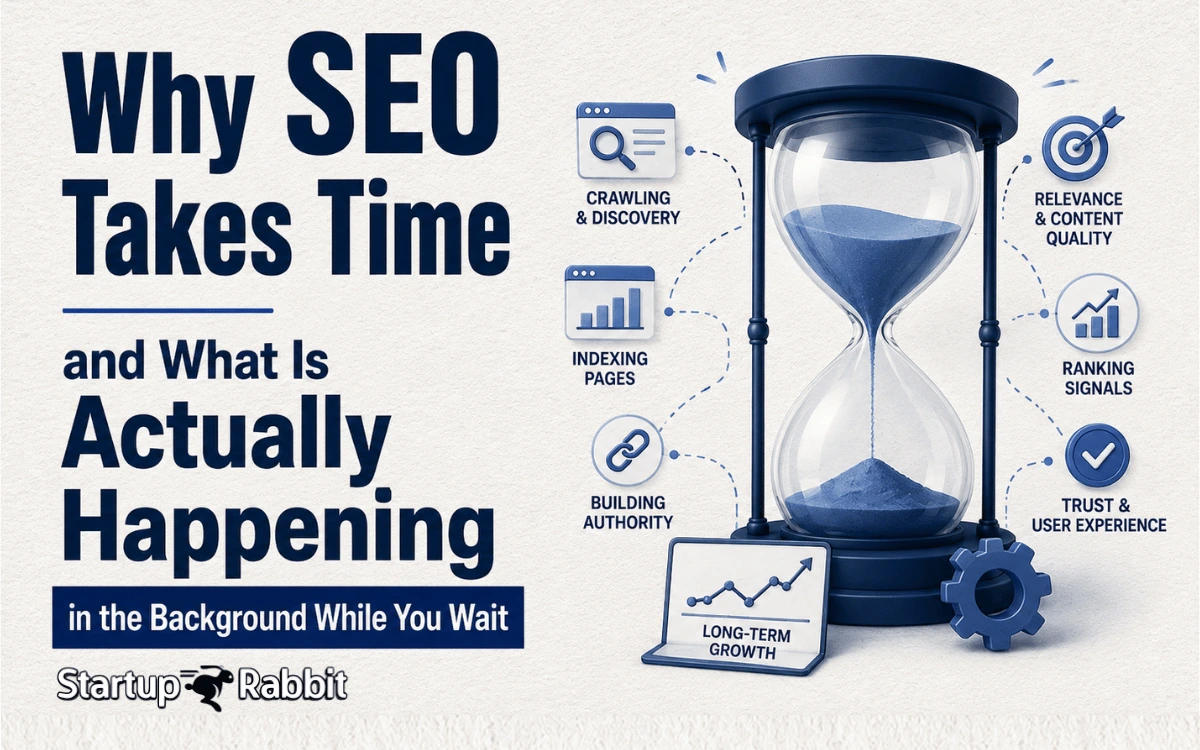
Every business owner asks some version of the same question within weeks of starting SEO:
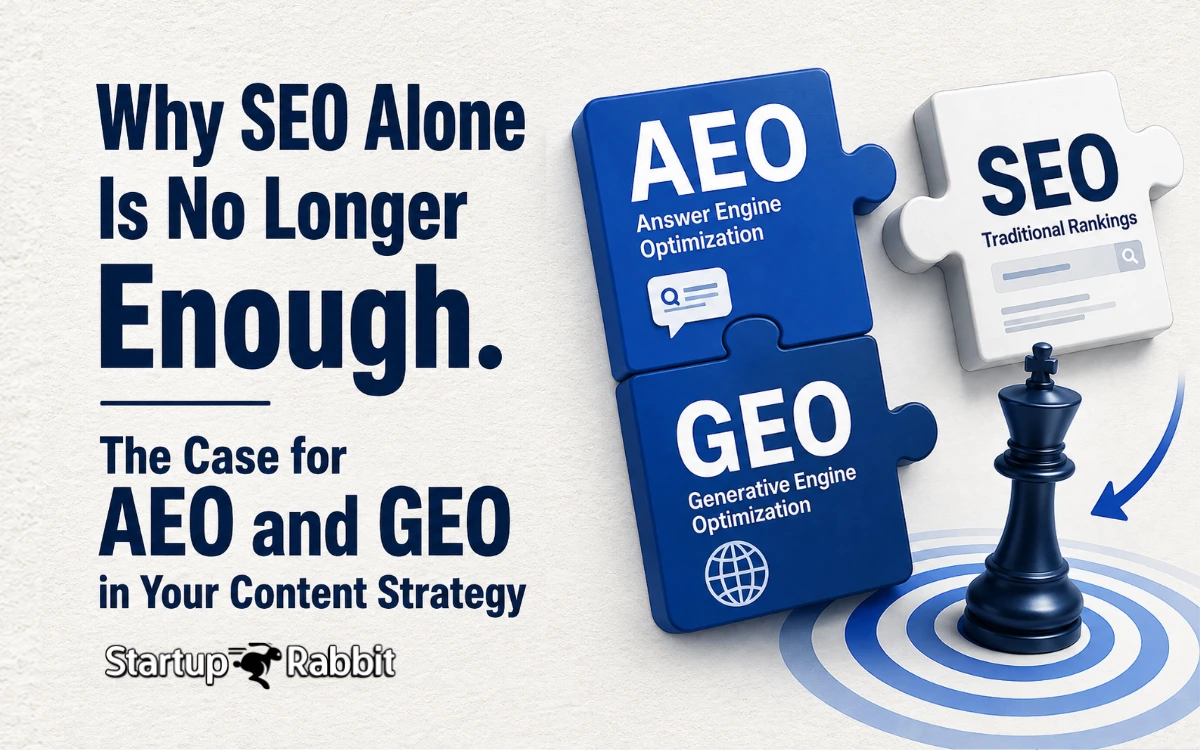
Search has evolved from blue links to a rich mix of answers, conversations, and AI-generat
As AI assistants and generative models are able to read and summarize content and then rep