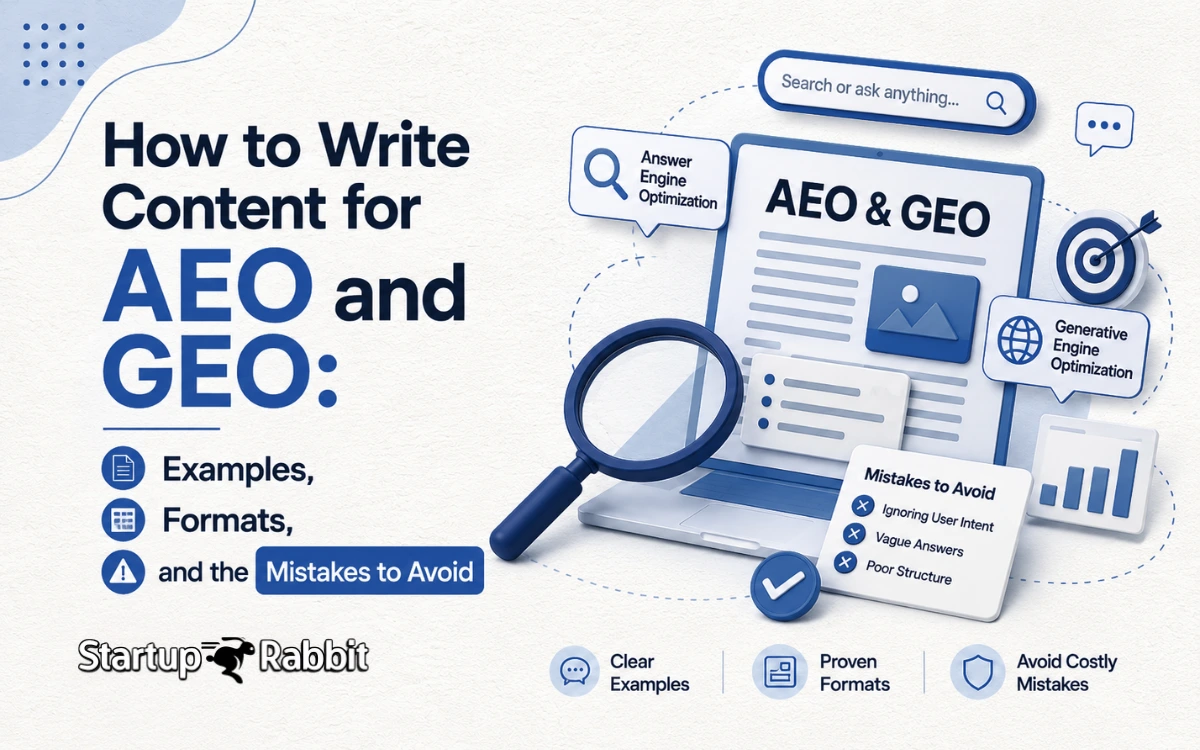
As AI assistants and generative models are able to read and summarize content and then reply in response to users’ questions, it is now essential to create content appealing to machines and humans. This guide will provide you with content writing tips for AEO (Answer Engine Optimization) with easy-to-understand examples, formats and pitfalls to avoid. We will look at pre-designed templates, example of content for AEO and GEO, and simple instructions to use. Furthermore, to help your web pages appear in the highlighted snippets, AI citations and ChatGPT-like conversations.
What Is AEO and GEO?
Understanding Answer Engine Optimization (AEO)
AEO is the optimization of content for quickly-retrieved searches by search engines and AIs like Siri and Alexa, rather than the ranking of pages for web search. The purpose of AEO is to achieve featured snippets, knowledge graphs and voice search ranking, which helps satisfy user demand for instant answers. AEO want users to get their answer straight away, so this makes the AI much more accessible to index and crawl your content. It makes it more conceivable that your pages will feature in a direct answer and a voice search.
What Generative Engine Optimization (GEO) Means
GEO is the process of structuring your content in a way AI search engines like ChatGPT and Google Gemini can understand and recall information from. AI search engine result pages are not websites, but they collect information from websites to help directly answer a question. There is increased chance that your content will be AI with GEO.
How AI Search Is Different From Traditional Search
| Feature | AI Search (e.g., ChatGPT, Gemini, AI Overviews) | Traditional Search (e.g., Google) |
| Output Format | A direct, synthesized answer or summary. | A ranked list of “blue links” and web pages. |
| Query Input | Long, natural language and conversational prompts. | Short, structured keyword-based queries. |
| Information Gathering | Machine effort: The AI retrieves multiple sources and does the synthesis for you. | User effort: You click, read, and synthesize data across multiple pages. |
| Context & Memory | Remembers past prompts in the session, allowing multi-turn, conversational follow-ups. | Treats every query as an isolated, one-off search. |
| Authority | Relies on contextual accuracy, source credibility, and cross-source verification. | Relies on domain authority, keywords, and backlinks. |
Why Businesses Need Both AEO and GEO Strategies
AEO and GEO working together allow brands to target all forms of modern search and ensure they aren’t lost in the new AI chatbots that have supplanted traditional search engines for some tasks. AEO wins brand presence on voice search and featured snippets, while GEO can achieve branded results directly in an AI-synthesized response with citations and referrals.
AEO vs GEO vs Traditional SEO
| Aspect | Traditional SEO | AEO | GEO |
| Goal | Rank in top 10 results | Be extracted for direct answers | Be cited in AI-generated synthesis |
| Target Systems | Google/Bing organic rankings | Featured snippets, voice search, AI summaries | LLM citation in ChatGPT, Claude, Gemini, Perplexity |
| Primary Metric | Keyword rankings, organic traffic | Snippet ownership, voice response frequency | Citation frequency, Share of Voice in AI answers |
| Core Tactics | Backlinks, keywords, technical health | 40-60 word answers, Q&A format, FAQ schema | Expert quotes, statistics, consensus building, inline citations |
| Content Style | Comprehensive, keyword-optimized | Concise, question-focused, structured | Evidentiary, citable, authoritative |
| Success Signal | Position 1-3 in SERPs | Featured snippet or “People Also Ask” inclusion | Brand mentioned in AI Overview or Perplexity answer |
Why Content Structure Matters for AI Search
- Use modular content blocks: AI views content as individual modules instead of scrolling down a page. So every piece of content you write should be self-sufficient. The page should stand on its own and not depend on external sources of content.
- Include semantic formatting: The more structured your content, the better AI can understand context and navigate the content on a page. It uses heading tags, bulleted lists, tables, or structured HTML; schema markup improves accuracy for search engines and AI in general.
- Structure the facts: Use comparison tables, lists, and Q&As wherever you can instead of a long paragraph. Structured text makes it easier for AI to quickly check prices, technical specifications, and prices, and minimizes the chance of AI misinterpreting what your information states.
- BLUF Principle: Begin every section with the BLUF (Bottom Line Up Front) and clear headings to make it obvious what the key takeaway is and for AI to reference it in search results.
Example of Content for AEO and GEO – Understanding the Difference
1. Capturing a definition-focused query (AEO).
A martech vendor increases visibility to “what is marketing automation.” A page with a clear definition at the top, an elaborated system, common use cases, and surrounding terms increases the chance of a page ranking in answer-box-like SERP features. The martech vendor isn’t only supplying definitions content, but also descriptive page headlines, standalone answer content segments, and schema markup. Slap search engine context to your internal linking and ensure a slick UX. This helps to improve their chances of being referenced in an answer box even when no one click through.
2. Earning AI citations (GEO).
A Fortune 500 analytics company presents themselves as a thought leader on ecommerce trends by putting data and insight at the service of their clients to create a report that delivers specific facts and context. The content of the issues in the report is original and using their data, the information presented is highly credible and of an actionable type, for enterprise marketing organizations. This style of content is quite likely to return anytime an AI searchees for e-commerce trend content.
AEO Content Format Examples That Win Featured Answers
Definition-Based Content Example
Your definition begins with one single sentence and your expanded answer is 40-60 words followed by your one-line source.
Step-by-Step Instruction Format
Number your format with a simple, actionable step, the estimated amount of time required, or the tools you need.
Question-and-Answer Content Structure
Questions that many people will wonder are written in H3 with the answers just underneath.
Comparison Content Designed for Answer Engines
Finally a short table or bullet point list that compares things in 3 to 5 concise points.
Featured Snippet Content Example: Structuring Content for Quick Answers

GEO Optimised Content India – Best Practices for Local Businesses
- Audit your service pages and blogs for pages that answer users questions in the moment.
- Rewrite your introductions to provide a straightforward answer
- Include schema markup in the FAQs and create / group content into a topical page hierarchy to show topical authority,
- Include author credentials, client reviews and references in order to increase the E-E-A-T.
- Finally, measure the frequency that your brand is referenced in tools such as ChatGPT, Perplexity and Google AI Overviews and monitor performance in organic search.
How Indian Businesses Can Benefit From GEO
This is not a solution only for those that have national or international reach. Even a small shop around the corner stands to benefit. When you search terms with an AI tool like “best digital marketing agency in Vashi”, or “example of content for AEO and GEO,” the answer comes from your business profiles, structured pages and reviews.
For international clients, the new AI solution opens a real window. It provides the opportunity for any Indian company that puts up rich, authoritative content, structures the content well, uses schema and E-E-A-T signals. It appears in the answers of AI for users from countries like the United States, United Kingdom, Australia, etc.
AI Answer Content Structure That Search Engines Prefer
- Generate sections, where each section contains answers to one and only one question or sub-question and can be independently reused or edited.
- Include clear hierarchical structure like H2, H3 and H4. H2 clearly outlines what question or topic is being covered. H3 and H4 are used to clarify scope and intent.
- Be clear and explicit; don’t assume the reader, or AI, can or will figure out cause-and-effect relationships, explicit definitions and answers.
- Put the answer first. Each content section should contain a direct answer to the question asked followed by evidence, reasoning and examples that support it.
- Optimize each section should contain an answer that will work alone and be extractable for direct presentation by a search engine, without edit.
FAQ Content AEO Strategies for Higher Visibility
- Clearly organized semantic structure: Each FAQ forms a self-contained semantic unit, with a specific question presented in it, and a direct answer. This makes the AI answer engine more easily digest, extract and serve accurate responses.
- Enhances AI content extraction: In a long-form content, the key information may be scattered across different sections in different places. But when it’s confined to FAQ content, it will ensure that the context and the answer are together. This helps to minimize ambiguity, and makes it easier for AI systems to identify reliable information quickly.
- Match uses natural language for the user: FAQs are written conversely, like in interacting with an AI assistant. Rather than throwing in lots of terms to your posts, they answer authentic questions for example “How can I pick an e commerce platform that works for my business? That’ll make the answer more relevant and the likelihood of being chosen as an AI-generated answer much higher!
- Enhances content visibility on AI search and answer tools: The FAQ format is easy to reference, summarize, and cite for AI models. This will enhance the visibility of your content on AI-powered search and answer tools.
How to Write for AI Search Engines Without Losing Human Readability

Content for ChatGPT Search India and Other AI Platforms
- Provide useful information: Create and share useful information that directly addresses your customers’ questions and solves their issues. This can help to develop handbooks of your experience and make sure that AI systems have accurate data to refer to.
- Boost the local newspaper influence and seeming agency: Obtain mentions on neighborhood web pages, neighborhood directories, commercial associations, and neighborhood teams. These signals lend credibility and bolster your online reputation.
- Set up FAQ pages: Develop FAQ pages which provide direct answers to customer questions. Well-organized FAQs allow for better comprehension of your business both for your business and an AI platform.
- Update the website regularly: Always update your service pages, new blog posts, customer testimonials, business information, etc. A fully functional website indicates that your business is trustworthy, interesting, and cared for by search engines and AI systems.
Schema Markup GEO Content – Enhancing AI Understanding
What Schema Markup Does for Search Engines
Schema markup enables search engines to interpret the information found in web pages.
FAQ Schema for AEO
- Function: Hyperlinks and enriches Q&A sections for good search results when looking for FAQs.
- Ideal use: Service pages, help centres, educational content.
Article and Organization Schema for GEO
- Function: Makes it easier to find blog articles or news on the internet.
- Contains: Title, author, release/s and featured image.
- Ideal for: Blogs, news publisher, news site.
Common Structured Data Mistakes
- Add all required properties: Add all required properties of the chosen type of schema. If any properties are left out, search engines might not be able to leverage your structured data.
- Match schema for page content: Be sure your page content has a correct corresponding schema. Don’t include irrelevant/redundant information.
- Error free syntax: Use valid and properly formatted JSON-LD. Use the Google Rich Results Test before publishing your markup.
- Use the appropriate schema type: Use the most specific schema possible, in this case, the page, and don’t mark up anything that isn’t related.
- Where applicable: Only use page-specific schemas on applicable pages and not throughout the website!
- After using the review schema correctly: Respect the review guidelines put in place by Google and annotate only real, eligible reviews.
Common Mistakes That Prevent AEO and GEO Success
| Common Mistakes That Prevent AEO and GEO Success | Why It Hurts | How to Fix It |
| Ignoring Conversational and Long-Tail Search Intent | Focusing only on broad keywords can cause you to miss users who search using natural, question-based queries. | Use conversational keywords, question-style headings, and answer common user queries. Tools like AnswerThePublic can help identify relevant questions. |
| Not Using Schema Markup and Structured Data | Without structured data, AI search engines may struggle to understand and display your content accurately. | Add relevant schema such as FAQPage, HowTo, and other structured data. Validate your implementation using Google’s Rich Results Test. |
| Keyword Stuffing and Unnatural Language | Overusing keywords reduces content quality and makes it less useful for both users and AI systems. | Write naturally, use synonyms and related terms, and focus on readability instead of repeating the same keywords. |
| Providing Fluffy or Indirect Answers | AI-powered search engines prefer concise and direct answers that quickly address the user’s query. | Start with a clear one- or two-sentence answer, then provide detailed explanations and supporting information. |
| Ignoring Voice Search and Mobile Optimization | Poor mobile experience and content that isn’t optimized for voice queries can reduce visibility in AI-driven search results. | Use natural language, optimize for voice search, improve page speed, and ensure your website is mobile-friendly. |
| Letting Content Become Outdated | Old content with outdated information loses relevance and authority over time. | Perform regular content audits, update statistics, refresh examples, revise publication dates, and include the latest industry developments. |
| Not Creating FAQs or Q&A Sections | Missing FAQ sections limits your chances of appearing in AI-generated answers and featured search results. | Add FAQ sections with clear, concise answers and implement FAQPage schema markup. |
| Treating AEO/GEO Separately from SEO | Managing SEO, Answer Engine Optimization (AEO), and Generative Engine Optimization (GEO) independently creates gaps in your content strategy. | Combine SEO, AEO, and GEO best practices into a single content strategy that serves both search engines and AI platforms. |
| Ignoring Website Structure and User Experience | Poor navigation, weak content hierarchy, and difficult-to-crawl pages reduce both user satisfaction and AI understanding. | Organize content with meaningful headings, short paragraphs, clear navigation, internal linking, and ensure your site is easily crawlable. |
| Ignoring AI Mentions and Off-Site Signals | AI systems consider external signals such as brand mentions, reviews, and authority across the web. | Monitor AI-generated mentions, manage online reviews, build high-quality citations, and strengthen your brand’s online reputation. |
A Step-by-Step Framework for Creating Generative Engine Optimisation Content
1. Map the prompts that matter
Research which prompts are driving purchasing decisions within the AI, and which are simply keyword search. Group prompts into 3 categories:
Category-level (“Best [category] tools”)
Problem-level (“How do I increase my brand visibility?”)
Comparison (“[Your brand] vs [competitor]”) Plot 15 to 20 of these relevant prompts.
Step 2 – Audit Your Current AI Footprint
Perform an assessment of how well your brand shows up for each of your mapped prompts across AI platforms. Record where your brand gets mentioned and cited, how the brand is presented and if there’s a significant presence from competitors. If you can find the sources an AI is pulling when it doesn’t list you, you’ll know where to gain citations.
Step 3 – Fill citation gaps before you begin creating new content
Evaluate the areas with citation gaps where competitors get referenced but you do not. Address citation gaps by employing a two-track system:
1. External citation building to get your brand onto high-trust online venues.
2. Restructure your content to enable citation.
Step 4 – Publish in an organized fashion and test what works
Produce well-placed, content-driven pieces that reflect your citation strengths. Examine weekly metrics (mention rate, citation rate, share of voice), but measure prompt convergence monthly and evaluate your efforts there. You want to stay away from checking against a single prompt and must focus away from the single concept of SEO rank.
Measuring Success in AEO and GEO
- Test manual citations regularly: For each step of the customer buying journey, come up with 20-30 questions to test in ChatGPT, Perplexity, Gemini, and Claude. Document the locations of your brand’s presence, competitive mentions, and do it again every month. Thereby, observe your brand’s progress and missing opportunities.
- Monitor AI referral analytics: Study and understand your AI driven traffic that comes in from tools like Perplexity, Google, and of course, ChatGPT. Build up from a long-term point of view over several months, rather than high volumes at the start.
- Identify branded search and direct visits: Keep an eye on growth in branded searches and direct traffic, as chances are that whenever the AI suggests seeing your brand or website, users are likely to do so.
- Analyze conversion data: Yes! – compare the visitors referenced by the AI with other channels of your prospecting. AI recommendations create trust before conversions; their purchases occur more quickly, and increase their conversion rates. Furthermore, when it comes to their engagement, it is higher. Whereas their bounce rates are lower.
- Understand competitive positions: Measure the visibility of competitor content and recognise what content is missing to increase topical authority and focus on content opportunities with the highest potential impact.
Future of Content Optimisation for AI Search
It will be part prediction SEO, along with a bit of AI enabled dashboards, allowing brands to forecast and adapt to search engine algorithm changes.
Using semantic tracking, citation management and user engagement, marketers will finally see the return on investment of their AI search optimization strategies.
Success in an AI world will depend on a brand’s visibility, authority and relevance to both humans and machines. By implementing structured tracking, semantic accuracy, and proactivity, your brand’s content will succeed.
Conclusion
The way to success in the era of AI-based search is the perfect combination of AEO’s direct clarity with GEO’s authoritative context. Keep answers concise and snappy – 40-60 words – to secure featured snippet spots, and elaborate with thorough, well-cited, structured content for AI search. Make sure to utilize Schema markup for articles and FAQs, and use Local intent with awareness for your target markets, especially in India. Of course, you’ll be paying more attention to AI-related searches on top of other important SEO rankings. Produce content that’s not only helpful at a glance but also deeply sourced. Repeat practical example of content for AEO and GEO to maximize your brand’s reach with both users and AI.
FAQs
AEO (Answer Engine Optimization) is what optimizes your content for the AI that sits on top of a search engine to give a direct answer (Google AI Overviews). GEO (Generative Engine Optimization) shapes a brand’s narrative and topics to generate a citation or recommendation from AI search engines (ChatGPT, Perplexity, etc).
Content writers now need to develop content that AI-powered search tools, whether it’s the new AI Overview from Google or Gemini, or even the ChatGPT. This content won’t result in the user clicking away, but will instead consume, including reference for your page. An “Answer Block” is answer-first content, which is the concise (50-80 word) response at the start of a web page. As it directly and factually answers a specific, conversational search query.
GEO (Generative Engine Optimization) optimizes for a brand’s content and narratives for the large language models behind AI search engines (like Google Gemini, ChatGPT and Perplexity).
AI search engines use a Retrieval Augmented Generation (RAG) pipeline, a step-by-step process to interpret and read your digital content.
The structure is answer-first, scannable and modular according to the Digital Marketing Institute’s Guide to AI Search.
AI search content tips the marketers must know about the time that searchers. So marketers will have to go the days of keywords, with clean, structured content to build the domain authority for their space.



Related items
Navi Mumbai has changed a lot in the last few years – healthcare, real estate, manufacturi
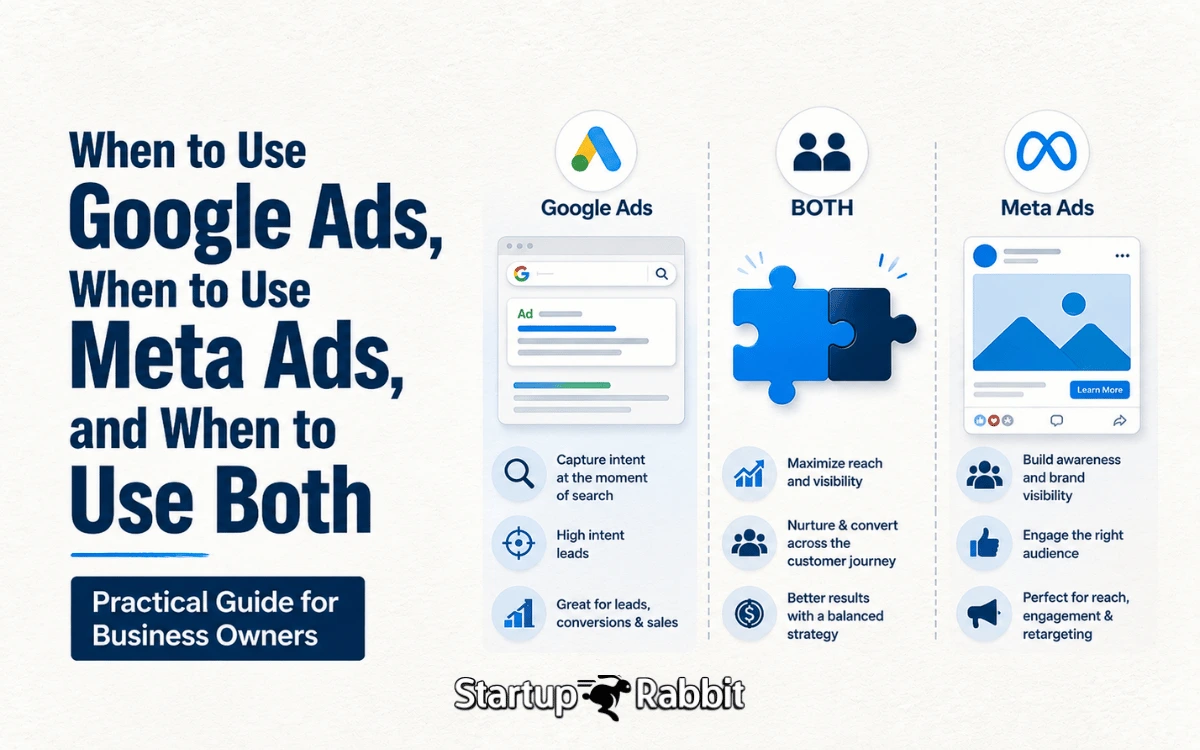
Almost every business owner eventually asks the same question: should our ad budget go to
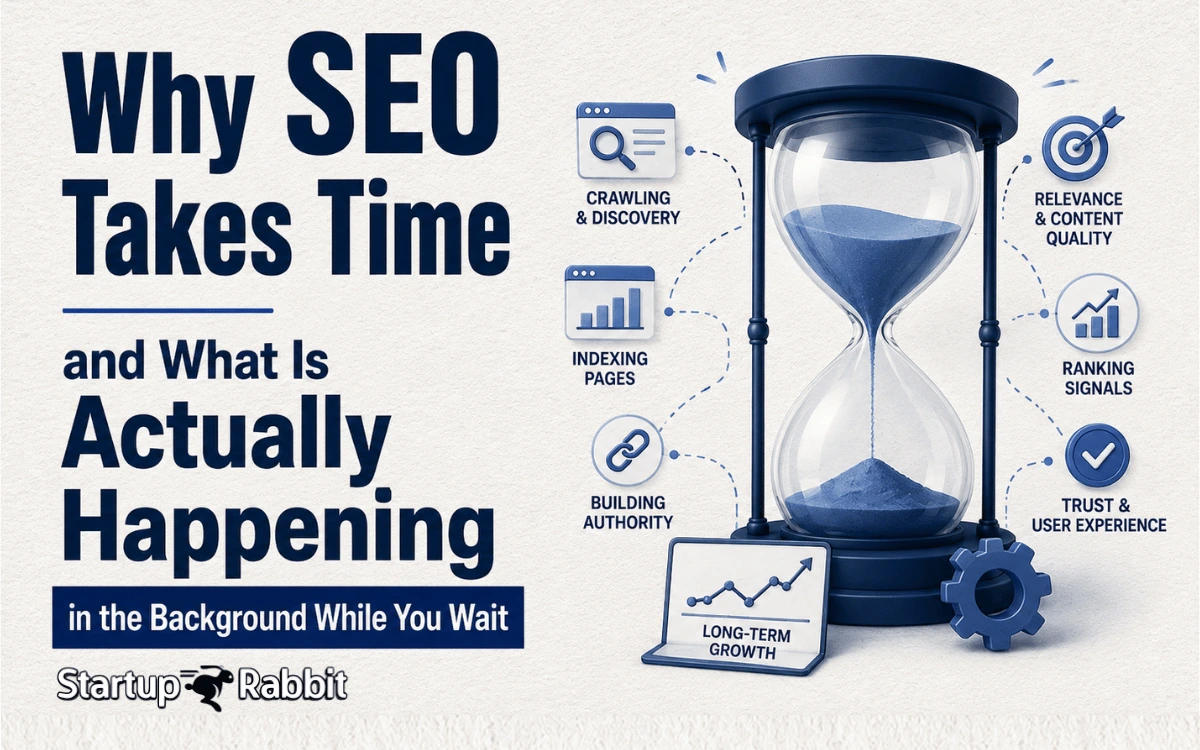
Every business owner asks some version of the same question within weeks of starting SEO: